Thursday, August 14, 2014

Classics Thursday: The Rules of the Game (1939)


When I am about to watch a film which some label as "the greatest film of all time" I always feel a mixture of anticipation and foreboding. My anticipation stems from the fact that I am about to experience a "classic" for the first time. The foreboding stems from my feeling that there is no way the film will meet up to that high expectation. To call something the "greatest of all time" is to make it nearly impossible to approach with the right expectations. I'll never forget the first time I watched Citizen Kane. I was so excited to finally see the "best film ever made". I finished the film with a deflated feeling. Was it good? yes, but it was hard to think of it as the "greatest of all time". I had a feeling last night that The Rules of the Game would end up making me feel the same way. This French film from 1939 has been hailed by critics as a supreme masterpiece. Based on the synopsis, I did not see how this could be possible. The plot centers around a country estate wherein several members of the French aristocracy face many trials and tribulations with regards to that time honored of human emotions: love. It didn't seem like anything new or epic in scope and it didn't seem like the sort of canvas upon which a "masterpiece" could be painted on. Yet, the Rules of the Game defied expectations; it truly is one of the greatest films ever made.

The greatness of this film for me lies not in its biting social commentary of the French upper class on the eve of WWII, but rather in how absorbing this film is. The film brings you into its world so adeptly that after it was over I had to remind myself I had never actually lived in that house or known any of those characters. Today's blockbusters seek to bring people out of there ordinary world all the time. This summer I joined a gang of mutants, fought apes that could talk, and traveled through space with Chris Pratt, but none of these experiences was as engaging as the Rules of the Game. A lot of this has to do with the director, Jean Renoir's, use of the camera. It is a camera so free in its movement. In many scenes the people who the frame focuses on will change multiple times. This sense of fluidity creates a reality, a society, in which all of these people interact. The characters are well developed to be sure, but the film is focused more on their world than any specific character. To my mind there is no real hero in this film. There is no one who the audience is supposed to "root for". This further focuses the viewer on the society as a whole.

The realism is further created by having several scenes in which one can hear characters talking over one another. In some sequences many different actions are carried out at the same time. Many films of this period focused action on only one or two characters in a scene, but here the whole point is that many actions are taking place. Again this creates a world for the viewer rather than a narrative.

It is all so expertly shot that one can forget the marvelous dialogue which is spoken in the film. The script is razor sharp and each of the many characters feels unique. It is at moments funny and deeply tragic. I think that this mix of emotions helps to make the film all the more real for the viewer. At times we want to laugh and at others we are disgusted.

I think that some may read this and then see the film and be disappointed. That is inevitable when one lavishes such praise on a work. I think that seen in context it is difficult not to recognize the Rules of the Game as a great film but seen out of context I could understand, just like with Kane, how it would underwhelm some people. Nevertheless I wholeheartedly recommend giving this film a try and experiencing one of the greatest masterpieces cinema has to offer 5/5!

Thursday, July 10, 2014

Classics Thursday: Bananas (1971)


In honor of his new film Magic in the Moonlight coming out July 25th I thought I'd take an opportunity to look back at Woody Allen's early career. This was the time when his films were strictly comedic in tone and low on budget. Bananas was only his third directional effort and as a comedy it works surprisingly well.

Bananas is the absurd story of a New Yorker who tests new products to see if they are safe for commercial use. After a break up with his girlfriend he decides to go to a small South-American country. Through a series of events he eventually becomes the leader of this small country. It is a parody of the American "puppet countries" in South America of the time combined with a sense of anarchy that is only matched by the Marx Brothers.

Allen's wit is in sharp form, especially in the early stages of the film. When the move to South America is made the film becomes even crazier and the whole thing reaches dizzying heights in one of the funniest courtroom scenes in movie history. Allen's earlier films are often "put-down" as immature and while this may be true there is no denying that Bananas is really funny. If you're looking for a good laugh you really can't do any better than this.

The film is a little dated in areas but the sharpness of the humor makes up for it. While not every gag works enough do that the film is enjoyable from start to finish. I was surprised how funny this gem was. If you get a chance to see it you owe to yourself to check out this great early Woody Allen film 4/5

Wednesday, May 28, 2014

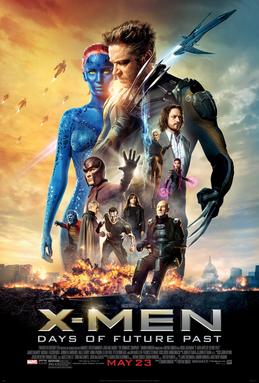
X-Men Days of Future Past (2014) Review


X Men Days of future Past is really a statement by its director, Bryan Singer. A statement that not only can he direct a great comic book movie but that X Men is HIS franchise. Singer began the franchise back in 2000 when comic book movies were not the box office giants they are today. It can be argued that he directed the first "modern" comic book movie. It was a film which utilized the relatively new tool of  CGI to help bring its powerful heroes to light. After that first installment he followed it up with a sequel which many critics believe is even stronger than the original. The franchise was off to a great start and Hugh Jackman's Wolverine, Patrick Stewarts Professor X, and Ian McKellen's Magneto were now instantly recognizable. Unfortunately for us movie-goers the third installment was helmed by another director and it suffered for it. After this, two wolverine movies were made, and then in 2011 the franchise was "rebooted" by Mathew Vaughn with X-Men First Class. First Class gave us the backstories of Charles and Erik before they became enemies. It was set in the sixties and had a great Bond-like vibe. I thoroughly enjoyed this movie. As you may be able to tell from this complicated history the franchise was really all over the place and the task was given to Bryan Singer to right it all. It is a seemingly impossible task but miraculously he has pulled it off and made my favorite X-Men film to date.

The film opens in the future where Mutant killing Sentinels have wiped out much of civilization. Professor X sends Wolverine back in time to stop these  Machines from ever being used. This plot allows for a bridging of the universe of the first three films and the universe of the "reboot". Of course complications ensue and many great twists occur along the way which you should enjoy for yourselves. One of the best things about this film is just how great the cast is. everyone is back and plays their characters with a virtuosity the blurs the line between actor and character. Stewart IS Professor X and Jackman IS Wolverine just as Fassbender IS the younger Erik and Jennifer Lawrence IS Mystique. The story fleshes out both time periods even if the majority of the film is set in the past. The film is not afraid to have fun either. It was probably tempting to make everything in a film this epic deadly serious but it is a credit to the script and to singer that the film ahs plenty of moments of fun.

Singer shows off in several sequences that remind the audience just how good the early X-Men films were at bringing the comic books from the page to the screen. The action sequences work and they are done with an energy which keeps the film exciting. There enough surprises along the way that the movie never becomes stale. To be a comic book movie made in 2014 and still feel fresh is a great feat.

If there is one nit-pick it would be that the characters who are specific to the future don't get much time to be fleshed out. Some of them are just kinda there. For comic book fans this is probably fine because they are already familiar with the characters but for the average film goer some of the characters seem like extras. I'm not suggesting they should've been fleshed out because that would have weighed down the film but it is something which I noticed. The film packs so much into its run time it's really incredible how well paced it is. The fact that Singer was able to bring together this convoluted franchise is as great a feat as what Whedon did with the avengers. The fact that he made me really excited about future X-Men movies is maybe something he deserves even more praise for 4.5/5!   

Thursday, May 22, 2014

Classics Thursday: On the Waterfront (1954)


In continuing with my new series I am reviewing another great film. This one is very well known, so it is not in the "gem" category, but after picking up Criterion's wonderful Blu-Ray this week I couldn't help watching it again and reviewing it.

Very few films have as important a place in film history as On the Waterfront. Many times a film is either historically significant, in that it is inexorably connected to its period due to its subject matter or style, or artistically significant, In that the techniques used to create the film were revolutionary. On the Waterfront is in that rare group of films that are both historically significant and artistically significant. The historical significance stems from its connection to the Hollywood blacklist. This has been written about many times in many places and really has very little bearing on a review of the film so if you are interested in the significance this film has in relation to the blacklist feel free to look it up for yourself. For the purposes of this review I will focus on the many advancements On the Waterfront made in terms of acting and filmmaking technique.

On the Waterfront is the story of Terry Malloy who begins the film as a heavy for the waterfront union. Throughout the course of the film Malloy begins to realize the types of atrocious things the union is doing and finally stands up against them. This is difficult since his older brother is very close to the union boss. The film is about Terry standing up for what's right and coming to realizations about his character. The true power of the film cannot be given in a brief synopses as this film is really about character. The revolutionary acting and directing allow this to be possible.

This film is a master-class in method acting, an acting style which was still quite new at the time. Brando's performance is legendary, and rightfully so. He brings so many layers to Terry that you feel that the character really comes alive. The famous "contender" speech is rightfully famous as well. It is really the dramatic peak of the film, and while repeated over and over it still retains much of its power. The rest of the cast also turn in tremendous performances. Eva Marie Saint in particular seems to work very well with Brando and you can't imagine another actress in that role  Karl Malden plays my favorite priest in film history, Father Barry. Finally Lee J. Cobb brings the right amount of nastiness to the role of the ironically named Johnny Friendly.

Acting is often what draws people to this film but Kazan's direction and innovative location shooting are what help make it a "perfect" film. The idea of making a movie, in widescreen no less, on a grimy waterfront was risky in the 1950's. This level of realism had been explored in Europe, especially Italy (see Bicycle Thieves as an example), but in America it was just not typical. Kazan brings an energy to the film that keeps everything moving. His close ups allow the actors to act and his framing gives every scene the right mood. The score is by Leonard Bernstein and it is quite dramatic but because of Kazan's energy it works very well.

On the Waterfront is a movie everyone should experience at some point. It is both a moral tale and a character study which works on a variety of levels. If you haven't seen it now is the time to check it out and if you have, you already know that it is worth going back to. It is simply one of the classics of cinema 5/5!

Thursday, May 15, 2014

Classics Thursday: Charade (1963)


After a short hiatus (due to studying for finals) I am now back writing film reviews. For the summer I am going to institute a new series called "Classics Thursday". Every week on Thursday there will be a new review of a classic film. Some films will probably be ones that many may have seen, but my goal is to find, and review, some gems. Because of this, If you have any suggestions for movies that I should review for this series please comment.

Charade has been called "the best Hitchcock film Hitchcock never made", by that description alone I knew I had to see this film. Charade was directed by Stanley Donen, who, while not as well known as Hitchcock, is a great director in his own right. Donen is known for his musicals like Funny Face and my all-time favorite, Singin' in the Rain. Charade is the first, and only, pairing of two of the screen's most iconic stars: Cary Grant and Audrey Hepburn. Based on this film it's a shame that these two never did another film. All of this talent behind, and in front , of the camera makes Charade a truly fantastic film in the classical Hollywood vein. It was made in a year when that style was slowly dying out, but it shows no signs of aging in Charade.

Charade begins with a murder, the murder of Audrey Hepburn's characters' husband. This murder leads to a series of twists that really should be experienced uninhibited by spoilers. Suffice it to say, that this film is a jigsaw puzzle in which no one can be trusted. It is a thriller in the vein of North By Northwest with chases, witty dialog, suspense and romance in equal measure. Grant plays the urbane character he does so well and Hepburn is really the center of the film. Both stars light up the screen. Part of the reason for this, is the quality of the dialogue, but another reason is the power of seeing these two icons meet. The supporting cast is filled with great actors playing the roles we always imagine them in. Walter Matthau plays a member of the state department while George Kennedy and James Coburn play assassins. This depth in the cast is reminiscent of the great Hollywood films of old.

Donen directs the film with a style that is very reminiscent of Hitchcock. This is a major compliment. Donen creates sequences that are memorable long after the film is over. The musical score is by Henry Mancini, and that's all you need to know to know that it's good. The film takes great advantage of its locations and seeing it on Blu-Ray was a fun visual experience.

A surprising aspect of Charade is its comedy. It's as if Donen set out to create a perfect combination of the classic screwball comedy of the thirties and the post-war thriller of the forties. For the most part this combination is incredibly successful. The romantic comedy aspects of this film make Charade a little like a happy median between Hitchcock's To Catch a Thief and North By Northwest. This makes for one of the most entertaining experiences a film goer could have, but it is impossible to call Charade perfect. As with anything this tightly plotted, it can seem contrived at times, and some of the comedy could be a little bit out of place. Like Hitchcock however, because the film on a whole is so entertaining I really can't resist giving Charade a 5/5!

Remember if there are any films that you think are "gems" that you would like me to review please comment below!

Wednesday, April 9, 2014

Captain America The Winter Soldier (2014) Review


I may be in the minority but I enjoyed the first Captain America movie. It wasn't the greatest superhero extravaganza put on film but it was enjoyable, old fashioned fun, even if it took a bit too much from Indiana Jones. I was probably more excited to see this sequel than any of the other Marvel movies since the Avengers. As the hype grew my expectations were raised. After seeing the film I can definitely say it was worth the wait even if it didn't exceed my expectations.

Captain America the Winter Soldier's plot is something I really don't want to reveal. I know that many people have seen the movie already but for those that haven't you aren't going to get any spoilers here. The story involves Captain America, S.H.I.E.L.D., Black Widow, and a certain Winter Soldier. It is a movie that is filled with several sequences of action and which has a decent espionage plot to back it up. Chris Evans does a great job of bringing to life this classic hero. The rest of the cast play their roles very well and at this point it is hard to imagine these iconic characters in anybody else's hands.

The action in this film is truly incredible. I don't usually commend movies for their action but Cap 2 deserves praise. The opening sequence is probably the best opening Marvel has ever done, a character scene followed by a Bond-like sequence aboard a ship. This sequence brought the Captain and his shield to life like I have never seen before. The camera seemed perfectly placed throughout the scene and the stunts felt realistic. This opening was followed by so many good sequences that I think there wasn't a poorly done action scene in the film. The plot and script of the film are good but not great. The major twists and turns were pretty easy for a mystery and spy enthusiast to spot but luckily there were a couple of little twists that were unexpected. The dialogue had a sharp wit that never felt forced (cough Iron Man 3 cough).  It did not feel all that original though. It played around with current events which was interesting, but it felt surface level. The center-piece of the film was the action.

It's a good thing that the action was so good but there may have been too much of it. If a couple of the scenes had been shortened I feel like the pacing of the film would have been better and the plot more exciting. This is probably the hardest thing for an action film to get right, the pacing. In many ways Captain America the Winter Soldier is one of Marvel's best but despite its potential it can't beat out the big two (the first Iron Man and the Avengers). It's still one heck of a fun movie 4/5

Wednesday, April 2, 2014

The Grand Budapest Hotel (2014) Review


Wes Anderson is a filmmaker with a unique vision. His films create characters and worlds that are truly original. For some, his style can be off-putting in its oddness, for others, everything he does is a delight, for me, I find that his creativity is exciting, but not everything he does works. When it does work though, it's a filmmaker at the top of his game. Such is the case with the Grand Budapest Hotel a film that is my favorite Wes Anderson film to date and one that I'm sure will be in the running for my favorite movies of 2014. In short it is a true delight.

The beginning of the film sets up the main story by framing it not once, but three times.
The main story takes place in 1932 at the Grand Budapest hotel and it is about Gustave H. an esteemed concierge. The story is told from the perspective of his lobby boy who was new at the time. Soon the lobby boy and the concierge are wrapped up in a caper involving inheritances, prison break-outs, priceless art, ski chases, and murder. Ralph Fiennes brings the concierge to life with peerless timing and wit. It is he who helps give the film its great doses of humor with his delivery. The cast list is one of the most esteemed I have seen in some time and every actor gets to make a memorable appearance. This is a film that can handle actor cameos very well and I felt like they were all done to good effect without detracting from the overall story.

The true star of the film is the world Anderson creates and the innovative techniques he uses to get us into it. First there is the way he frames the story as a book being read. Many films have been structured this way but in this case the frame narration takes on a truly literary style. I felt it worked very well and added to the atmosphere that helped bring us into this world. In the main story Anderson is able to create the feeling of a classic Hollywood back-lot but with a very Andersonian touch. This film is meant to evoke those cosmopolitan comedies done to perfection by Ernst Lubitsch in the 1930's and 40's as well as some of Alfred Hitchcock's earlier work. It is not just a tribute though, it comes into its own in the way that is able to combine all of those elements with its own signature style. This helps the film to feel thoroughly fresh. The comedy is wonderful and the film is never afraid to surprise, which helps add to the audiences enjoyment.

Overall this is an entertainment of a highest order and something which I have not seen in a long time; an escapist film that is both intellectually interesting as well as a truly wonderful escape. Unlike many great recent superhero blockbusters which have gotten their intellectual side by going darker, the Grand Budapest Hotel does what many of its great, old-Hollywood pedigree did and creates an uproariously funny and enjoyable comedy which has layers to be found underneath its surface.  By doing this, like his influences, Anderson creates a world I certainly would not mind exploring again 5/5!