Showing posts with label Drama. Show all posts

Tuesday, April 14, 2015

TV Tuesday: the Sopranos Season 2 vs. Breaking Bad Season 2

TV has recently received almost as much, if not more, attention than film. Particularly these two crime shows, along with many others have been held up as the gold standard of the "new golden age" of television. Because of this, I am currently in the process of watching both and thought I'd compare both the shows' second seasons to see which was best. Why the second season you ask? for one, its the most recent season of each which I have watched and secondly I think the second season is when a show hits its stride. I will compare both seasons in a variety of categories and then give the overall winner. I will try to stay as spoiler-free as possible. So lets get down to business.


Expectations Based on the First Season
Both Breaking Bad and the Sopranos had good first seasons but both also had their struggles. For Breaking Bad, the writer's strike shortened the length of its season to seven episodes. For the Sopranos, it seemed to be a season spent finding its footing. There were brilliant episodes like the pilot, and "College" but there were also times when the show felt like it was still growing. While they both had missteps, the Sopranos and Breaking Bad both show great potential in their first seasons and so I had very high expectations for both.

Winner: tie

Main Character
Both Walter White and Tony Soprano are two of the most interesting characters ever created in any medium. In the second seasons of both shows each character got the ability to grow and explore new depths. Tony had to share screen time with a larger supporting cast while Walt was very much at center stage the entire time. I think both characters made great impacts on their series and continued to be incredibly interesting in equal proportion to each other.

Winner: tie

Supporting Cast
Here we finally have a clear victor. While Jesse and the rest of the Breaking Bad cast are good I find their actions as characters, particularly Skyler's, predictable and somewhat repetitive. This cannot be said for the supporting cast of the Sopranos. Every character has something interesting about him or her and this creates a world that feels like it doesn't just exist but that it is a living and breathing reality. The Sopranos spends more time focusing on its characters and building to action. Looking back its incredible how enthralling the characters and the universe of the Sopranos is and this is largely due to the supporting cast.

Winner: the Sopranos

Stand-out Episodes
In this category I'm going to look at what I thought were the two best/most memorable episodes of each show's second season and compare which stand-out more. This doesn't mean that they are necessarily better but that they stand on their own as great pieces of entertainment. For Breaking Bad my two favorite episodes of the second season were "Grilled" and "4 Days Out". Both of these episodes were intense and exciting pieces of television which focus on Walt and Jesse being involved in incredibly intense situations. This suspense is something that Breaking Bad does incredibly well and both of these episodes have plenty of it. They also stand out because they almost work as self-contained little suspenseful and entertaining short stories. The two Sopranos episodes I liked best in season 2 were "Commendatori" and "Funhouse". These were not as easy to choose because there were so many great ones. Both demonstrate the way that the Sopranos utilizes a slower pace to tell incredible stories. The first also has incredible cinematography in Italy and the second is the amazing season finale which even incorporates some surrealism. While these two episodes of the Sopranos were incredible and possibly better than the Breaking Bad ones they do not "Stand-out" as much and thus Breaking Bad gets the victory in this round.

Winner: Breaking Bad

Overall Story Arc
So it all comes down to this. If you were to take only the first part of the Breaking Bad's second season it might have a better chance, but while season two introduced several important characters and situations, I felt that its overall plotting was contrived. The Sopranos did not have as much action but the way that it managed to tell a great story over the season while also creating a fully realized world made its second season pretty incredible. In fact, there was hardly an episode of the Sopranos second season which I didn't think was great while I can't say the same of Breaking Bad. While I think Breaking bad is a great show the one I can't wait to get back to is the Sopranos.

Winner: the Sopranos

So their you have it the Sopranos has won this battle but we will see how things shake out when season 3 comes around.

Check back next Tuesday for a look at the 1960's camp classic Batman!

Saturday, January 3, 2015

The Imitation Game (2014) Review


The Imitation Game is a prime example of a “Hollywood” biopic.  These films are movies that use as their subject a famous person, generally a hero, who is played by a popular and respected actor. In this case it is Alan Turing played by Benedict Cumberbatch. These films take historical events and turn them into classic narrative formulas (i.e. beating the odds, rise and fall). They are generally well directed and they have an agenda that they wish to promote. These assertions about the Imitation Game are neither positive nor negative but rather simply stating the formula which it follows. Luckily for viewers, the Imitation game follows this formula very well.
This story of the genius who helped crack the German coding machine is a narrative of highs and lows. We have scenes of great accomplishment as well as scenes of great despair. It all centers on Alan Turing, a man whose life was seemingly full of these moments of exhilaration and despair. Events from his childhood up until his tragic death are intercut to form this story and I was surprised at some of the skill with which the intercutting was done. What was most surprising to me was the amount of humor and wit laced throughout the script. It really helps to bring the audience into the story, which is something that is necessary for a film like this to work.
Another key to the success of a “Hollywood” biopic is the acting. Cumberbatch carries the film with his wonderful performance. There are certainly shades of Sherlock here but he makes Turing his own. The rest of cast does well but their characters are not as “fleshed-out” as Cumberbatch’s. This is one of my complaints about the film: some of its characters are simply uninteresting. These people act like people in a movie and thus are predictable. Turing is the only one that seems real, while the others feel like plot devices.
The direction of the film is quite good and brings across the message quite well. This message is brought through with a power that never borders on preaching. The Imitation Game is a good film and a perfect example of a formulaic biopic but due to its stock characters it does not surpass the formula. For most however, it won’t have to. 4/5

Thursday, August 14, 2014

Classics Thursday: The Rules of the Game (1939)


When I am about to watch a film which some label as "the greatest film of all time" I always feel a mixture of anticipation and foreboding. My anticipation stems from the fact that I am about to experience a "classic" for the first time. The foreboding stems from my feeling that there is no way the film will meet up to that high expectation. To call something the "greatest of all time" is to make it nearly impossible to approach with the right expectations. I'll never forget the first time I watched Citizen Kane. I was so excited to finally see the "best film ever made". I finished the film with a deflated feeling. Was it good? yes, but it was hard to think of it as the "greatest of all time". I had a feeling last night that The Rules of the Game would end up making me feel the same way. This French film from 1939 has been hailed by critics as a supreme masterpiece. Based on the synopsis, I did not see how this could be possible. The plot centers around a country estate wherein several members of the French aristocracy face many trials and tribulations with regards to that time honored of human emotions: love. It didn't seem like anything new or epic in scope and it didn't seem like the sort of canvas upon which a "masterpiece" could be painted on. Yet, the Rules of the Game defied expectations; it truly is one of the greatest films ever made.

The greatness of this film for me lies not in its biting social commentary of the French upper class on the eve of WWII, but rather in how absorbing this film is. The film brings you into its world so adeptly that after it was over I had to remind myself I had never actually lived in that house or known any of those characters. Today's blockbusters seek to bring people out of there ordinary world all the time. This summer I joined a gang of mutants, fought apes that could talk, and traveled through space with Chris Pratt, but none of these experiences was as engaging as the Rules of the Game. A lot of this has to do with the director, Jean Renoir's, use of the camera. It is a camera so free in its movement. In many scenes the people who the frame focuses on will change multiple times. This sense of fluidity creates a reality, a society, in which all of these people interact. The characters are well developed to be sure, but the film is focused more on their world than any specific character. To my mind there is no real hero in this film. There is no one who the audience is supposed to "root for". This further focuses the viewer on the society as a whole.

The realism is further created by having several scenes in which one can hear characters talking over one another. In some sequences many different actions are carried out at the same time. Many films of this period focused action on only one or two characters in a scene, but here the whole point is that many actions are taking place. Again this creates a world for the viewer rather than a narrative.

It is all so expertly shot that one can forget the marvelous dialogue which is spoken in the film. The script is razor sharp and each of the many characters feels unique. It is at moments funny and deeply tragic. I think that this mix of emotions helps to make the film all the more real for the viewer. At times we want to laugh and at others we are disgusted.

I think that some may read this and then see the film and be disappointed. That is inevitable when one lavishes such praise on a work. I think that seen in context it is difficult not to recognize the Rules of the Game as a great film but seen out of context I could understand, just like with Kane, how it would underwhelm some people. Nevertheless I wholeheartedly recommend giving this film a try and experiencing one of the greatest masterpieces cinema has to offer 5/5!

Thursday, May 22, 2014

Classics Thursday: On the Waterfront (1954)


In continuing with my new series I am reviewing another great film. This one is very well known, so it is not in the "gem" category, but after picking up Criterion's wonderful Blu-Ray this week I couldn't help watching it again and reviewing it.

Very few films have as important a place in film history as On the Waterfront. Many times a film is either historically significant, in that it is inexorably connected to its period due to its subject matter or style, or artistically significant, In that the techniques used to create the film were revolutionary. On the Waterfront is in that rare group of films that are both historically significant and artistically significant. The historical significance stems from its connection to the Hollywood blacklist. This has been written about many times in many places and really has very little bearing on a review of the film so if you are interested in the significance this film has in relation to the blacklist feel free to look it up for yourself. For the purposes of this review I will focus on the many advancements On the Waterfront made in terms of acting and filmmaking technique.

On the Waterfront is the story of Terry Malloy who begins the film as a heavy for the waterfront union. Throughout the course of the film Malloy begins to realize the types of atrocious things the union is doing and finally stands up against them. This is difficult since his older brother is very close to the union boss. The film is about Terry standing up for what's right and coming to realizations about his character. The true power of the film cannot be given in a brief synopses as this film is really about character. The revolutionary acting and directing allow this to be possible.

This film is a master-class in method acting, an acting style which was still quite new at the time. Brando's performance is legendary, and rightfully so. He brings so many layers to Terry that you feel that the character really comes alive. The famous "contender" speech is rightfully famous as well. It is really the dramatic peak of the film, and while repeated over and over it still retains much of its power. The rest of the cast also turn in tremendous performances. Eva Marie Saint in particular seems to work very well with Brando and you can't imagine another actress in that role  Karl Malden plays my favorite priest in film history, Father Barry. Finally Lee J. Cobb brings the right amount of nastiness to the role of the ironically named Johnny Friendly.

Acting is often what draws people to this film but Kazan's direction and innovative location shooting are what help make it a "perfect" film. The idea of making a movie, in widescreen no less, on a grimy waterfront was risky in the 1950's. This level of realism had been explored in Europe, especially Italy (see Bicycle Thieves as an example), but in America it was just not typical. Kazan brings an energy to the film that keeps everything moving. His close ups allow the actors to act and his framing gives every scene the right mood. The score is by Leonard Bernstein and it is quite dramatic but because of Kazan's energy it works very well.

On the Waterfront is a movie everyone should experience at some point. It is both a moral tale and a character study which works on a variety of levels. If you haven't seen it now is the time to check it out and if you have, you already know that it is worth going back to. It is simply one of the classics of cinema 5/5!

Wednesday, April 2, 2014

The Grand Budapest Hotel (2014) Review


Wes Anderson is a filmmaker with a unique vision. His films create characters and worlds that are truly original. For some, his style can be off-putting in its oddness, for others, everything he does is a delight, for me, I find that his creativity is exciting, but not everything he does works. When it does work though, it's a filmmaker at the top of his game. Such is the case with the Grand Budapest Hotel a film that is my favorite Wes Anderson film to date and one that I'm sure will be in the running for my favorite movies of 2014. In short it is a true delight.

The beginning of the film sets up the main story by framing it not once, but three times.
The main story takes place in 1932 at the Grand Budapest hotel and it is about Gustave H. an esteemed concierge. The story is told from the perspective of his lobby boy who was new at the time. Soon the lobby boy and the concierge are wrapped up in a caper involving inheritances, prison break-outs, priceless art, ski chases, and murder. Ralph Fiennes brings the concierge to life with peerless timing and wit. It is he who helps give the film its great doses of humor with his delivery. The cast list is one of the most esteemed I have seen in some time and every actor gets to make a memorable appearance. This is a film that can handle actor cameos very well and I felt like they were all done to good effect without detracting from the overall story.

The true star of the film is the world Anderson creates and the innovative techniques he uses to get us into it. First there is the way he frames the story as a book being read. Many films have been structured this way but in this case the frame narration takes on a truly literary style. I felt it worked very well and added to the atmosphere that helped bring us into this world. In the main story Anderson is able to create the feeling of a classic Hollywood back-lot but with a very Andersonian touch. This film is meant to evoke those cosmopolitan comedies done to perfection by Ernst Lubitsch in the 1930's and 40's as well as some of Alfred Hitchcock's earlier work. It is not just a tribute though, it comes into its own in the way that is able to combine all of those elements with its own signature style. This helps the film to feel thoroughly fresh. The comedy is wonderful and the film is never afraid to surprise, which helps add to the audiences enjoyment.

Overall this is an entertainment of a highest order and something which I have not seen in a long time; an escapist film that is both intellectually interesting as well as a truly wonderful escape. Unlike many great recent superhero blockbusters which have gotten their intellectual side by going darker, the Grand Budapest Hotel does what many of its great, old-Hollywood pedigree did and creates an uproariously funny and enjoyable comedy which has layers to be found underneath its surface.  By doing this, like his influences, Anderson creates a world I certainly would not mind exploring again 5/5!

Tuesday, March 25, 2014

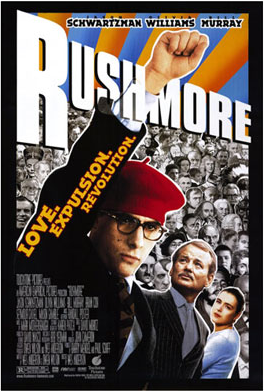
Rushmore (1999) Review


Comedy has been a genre of film which has, and will always be, popular. As the industry changed comedy has changed with it and Rushmore belongs to a type of comedy that could only have existed in the last 20 or so years, the auteur comedy. The auteur comedy is a type of comedy that derives its personality and sense of humor from the unique mind of an author or auteur. These comedies were not possible in the studio era of Hollywood when the humor used in a comedy had to be universal so as to appeal to a wider audience. With the advent of independent filmmakers auteur comedies were made possible because films could now reach more niche audiences. The Coen Brothers are masters of this comedy with their zany, wonderful and totally unique contributions Raising Arizona and the Big Lebowski. Wes Anderson is a relative newcomer to the field but his unique style immediately earned him a following and Rushmore was his breakout movie.

Rushmore tells the story of a fifteen year old boy who falls in love with a first-grade teacher. This simple premise is what allows Anderson to create a unique world populated by equally unique characters. Just when you want to fall into the comfort of a cliché the rug seems to be pulled out from under your feet. Max, the title character, is a unique creation and one of the aspects that I liked best about the film. Schwartzman embodies the character and makes him come to life in an unforgettable way. Bill Murray gets to show some serious acting chops as well, playing Max's adult friend. Their relationship is really the one at the heart of the movie and it is its unique nature that makes the film feel very original. The film is definitely a comedy with lost of humor and absurd situations. Sometimes these situations are so zany they could only exist in an alternate reality.

It is this reality which sets Wes Anderson apart and which also creates his movies' greatest weaknesses. Anderson is not afraid to hold back with his imagination and at times this can create wonder and awe and at other times this can create confusion and dislike. The acting is top notch in this film and the performances add to this world that comes to life before our eyes. Its vivid quality is striking and I think that many will find this movie memorable if only for the world and characters created. Sometimes the film got too wacky in a way I didn't like but I think that this will all be up to personal preference. As with any auteur comedy most people will have parts of the film they really like and identify with and other parts that may be off-putting. Rushmore, while not as good as the best Coen comedies, has many moments that are both funny and incredibly well done. It creates an unforgettable world and I can see why it made Wes Anderson a household name. 4/5

Tuesday, February 25, 2014

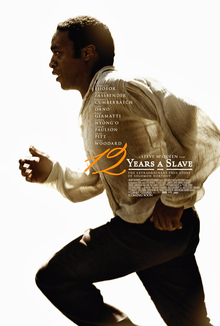
12 Years a Slave Review


Some films are great because they are entertaining (here's looking at you Raiders of the Lost Ark). Other films are great because they are visually spectacular (Star Wars, Gravity, etc.). Still some films are great because they are important, not just artistically, but historically. After finally seeing the much-praised 12 Years A Slave I believe it falls into that last category.

12 Years a Slave tells the story of Solomon. He is a free man who is captured and sold as a slave. This about all you need to know going in. The film uses this simple and perfect plot to help show the horrific nature of the institution itself. By using Solomon, a real person, as an outsider the director is able to bring us into this horrible world as Solomon is being introduced to it. This makes Solomon a character we can identify with, which helps us to better put ourselves in his situation. It is this that helps the director give the film such impact on the viewer. As Solomon is seeing and being oppressed by the injustice for the first time, we , as viewers, are as well.

Make no mistake, this is not Django Unchained. Not to malign that film but it used this backdrop relatively realistically as a way to provide context for its rather pulpy storyline. 12 Years a Slave is about pulling no punches. Some scenes are so hard to watch they will make you cringe. This cringing does not come from the gore on screen but from the acts themselves and sometimes the mere elapse of time. There is a point in the film where the director allows events to elapse in real time and this mere device makes that scene so hard to watch. In that moment I was not witnessing history from afar but living it.  I was very happy that the film made sure to be real and not over-or under-play any aspects as to, in some way, glorify the proceedings. The film felt real and raw.

The acting helped to bring this realism to the forefront as well. Ejiofor gives a perfect performance. He brings Solomon to life. Fasbender Is also incredibly well cast in this film and he creates a truly horrifyingly realistic slave-owner. Benedict Cumberbatch also makes a welcome appearance and does well with his screen time. The directing in this film is top-notch. Steve McQueen knows how to work the audience to incredible levels (as in the scene mentioned above) The film is one of the most recent epics to come out of Hollywood that one could actually call great.

Some might find that comparing 12 years a Slave to the Hollywood epics of old is insulting. They may feel that by making this comparison I am ignoring the films realism and true purpose. The Idea people have about the classic epics is that they are romantic and this film is certainly not. The comparison comes into play because like a great epic of old this film has a fantastic ensemble and well constructed story. Also like a classic epic this film takes a broad topic or period of history and makes a film that perfectly  captures it. It is important to note that while those two points put 12 Years a Slave in the category of a Hollywood epic there are several points in the film in which McQueen purposefully tones down these qualities. The specific shot that told me this was the shot of the boat with the slaves going down the river. The interesting fact is that there is no full shot of the boat on the river. The shot is instead of the propulsion of the boat and the water. This choice gives the film a distinct lack of romanticism that does a film of such serious subject matter credit. This film should be honored with  best picture and it was honestly the best film of the year. 5/5!

Tuesday, February 4, 2014

Oscar Watch: The Wolf of Wall Street Review


Martin Scorsese is a living legend among directors. His work has spanned decades and has garnered praise from critics and audiences alike. He will certainly go down in history as one of the great directors, sharing his company with the likes of Alfred Hitchcock, Howard Hawkes, Billy Wilder, Ernst Lubitsch etc. It is always a pleasure to go into a movie and know that you are witnessing the work of a living legend like Scorsese. The Wolf of Wall Street is a very entertaining film, feverishly directed with the energy that one would come to expect from the director of Goodfellas. Despite the artistry behind the camera the Wolff of Wall Street fails to completely overcome a script that doesn't quite earn its debauchery.

That script is by writer Terrence Winter who is famous as the head writer on the show Boardwalk Empire. Like that show there are many great scenes woven into this script about an extravagant stock broker but these scenes are only glimpses of brilliance in a script that fails to really do justice to the story. What I mean by this is that while the script shows many entertaining scenes of Jordan Belfort's excess it fails to show nearly any of the consequences of his actions. There is barely even a glimpse of the financial ruin that a man like Belfort caused. In fact while the script says that Belfort's actions as stock broker were illegal it never explains the reasoning behind this so the viewer is left feeling that Belfort was merely a guy who partied too hard and got caught. In many ways the film is the epitome of three hours of excess, entertaining excess at that, but still excess without much real substance. The one other positive about the script besides its entertainment value is the way that it manages to keep this long movie moving at a decent clip. So many outrageous things happen that we barely have time to internalize them and this is what makes the movie work reasonably well despite its flaws.

The reason I spent so much time on the script is that I feel like the script's lack of consequence was really the only thing burdening this movie. Mr. Scorsese is at the top of his game in terms of directing and several of the sequences feature incredible style. The acting is top notch because the cast is so meticulously chosen. DiCaprio deserves praise for his exuberance and believability in the role and Jonah Hill delivers another incredible supporting actor performance. Hill is one of the best comedic character actors in modern film when he is given the right character and here he shines just as he did in Moneyball. The soundtrack is well chosen as always and several of the sequences are laugh out loud funny. In fact I would say that Wolf was one of the funniest movies I saw this year and its a testament to the cast and director that this film was so entertaining. For some this movie will be too edgy but for others the lack of consequence in the script will not bother them in the least. Wolf could have been great but because of that one factor it fell to good and that's really more a testament to its legendary director that it wasn't any worse. 3.5/5

Saturday, January 18, 2014

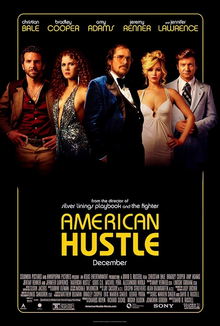
Oscar Watch: American Hustle Review


From the opening of the film there is no doubt that David O Russell's American Hustle is an excursive in style. The film begins with great confidence in media res not giving the audience any background about what's happening and expecting us to instead focus on the characters and their interactions. This is a bold move in what turns out to be quite a bold movie: one that has glamorous stars and which appears to have a glamorous plot line but one which is inevitably far more about characters and their relationships than one might expect. American Hustle is a complex and highly stylish film which defies expectations to the point where I almost feel like it requires a second viewing.

The truth is that the plot is very complex. Much of it is actually purposefully shady and left for the end of the film but when watching it for the first time one does not know that. This film builds upon this complex tale of con men, politicians, and FBI agents with many character studies. The film really cares more about the people involved and less about explaining exactly what's going on. This may be frustrating to some viewers who went to the film expected a tightly plotted film like Argo. There is a plot and when it reaches its conclusion it makes sense but it is a little more complex than the average plot of a Hollywood film.

The acting is where this film really shines. Christian Bale completely transformed himself for the role of Irving and he truly embodies the character. It is hard to believe that this is the same actor who played the Dark Knight. Amy Adams gives a really fantastic performance as well, showing the weaknesses and vitality of character in subtle ways that help to illustrate who Sydney is. Bradley Cooper does a fine job as the FBI agent. Jeremy Renner really does a remarkable thing in making this targeted politician one whom we actually sympathize with. And Jennifer Lawrence managed to not only hold her own  in this cast but give one of the very best supporting screen performances this reviewer has ever seen. Her energy and the realism she brings to the role fill the movie with so much energy that you want to applaud when her scene has finished. There are some great cameos as well but to spoil those would be to ruin the fun and there is much fun to be had.

American Hustle is directed with incredible style. Russell infuses this film with both a glamorous style (reminiscent of Goodfellas) and his own particular style as seen in his other films. This movie has glamorous stars playing con games and a well chosen musical score to match but in the end it works because of the acting and the characters of the film. Russell understands this and does not let the style get ahead of him. He is a great actors' director because he plays to their performances. This film really has two styles and plays to both of them. The first style is one that is broad and extravagant with flowing camera movies and soaring seventies music. The second style is more intimate and character driven  with the camera closer to the actors and the music subdued. because of this there is a lot going on in American Hustle and it really is difficult to take it all in. I have not yet had the ability to view it a second time but if I did I think that I would have an even greater appreciation for it. As it stands this film has actors and a director at the top of his/their games and that's reason enough to see it. 4.5/5

Monday, January 13, 2014

Oscar Watch: Saving Mr. Banks Review

After a winter break hiatus, I am now returning to this blog to write reviews in anticipation of the Academy awards. These reviews will focus on both the films themselves and their chances of winning Oscar gold and will conclude with my personal year in review.

Saving Mr. Banks had a very strong chance of ending up as a special feature on some Mary Poppins Blu-Ray someday. The idea of making an entire movie about the making of a beloved film classic was a risk because there was a chance that it could have no personality of its own. Thankfully for moviegoers Saving Mr. Banks not only has its own personality but is a truly fine film in its own right.

Saving Mr. Banks tells the story of PL Travers, the author of Mary Poppins;. We see scenes of her childhood and inspiration for the book as well as scenes of the older Ms. Travers working and fighting with the Disney company over the rights to her beloved characters. What makes this plot work is that it does well by the woman herself. By deciding to focus very much on her storyline this film becomes more than a making of documentary. We watch as the director slowly unfolds the character of this woman before our eyes and as he does so we slowly come to understand her.

Much credit for this must be given to Emma Thompson who brings Travers to life with a sense of realism that helps us to believe that this is a real person and also a real enigma. This is essential for the film to work the way it does and the acting job of Ms. Thompson helps give the film its life. Tom Hanks also give s a very good performance as Walt Disney. His character is far less of an enigma; he's a good salesman, and as an audience we feel immediately taken in by Hanks' presence. The film manages to both focus on Travers but also focus on the making of this classic film. When the film is at its best it combines these two goals in sequences that work on more than one level.

It isn't perfect though. It is quite a sentimental film and that may not be to everybody's liking and many of the developments that occur are not really unforeseen. There are certainly elements of the story that have been trod on again and again in these types of films and some may protest that it is not all entirely true to what actually happened.

Despite these minor quibbles this movie exceeded my expectations in that it was not just a love letter to Mary Poppins but a good film in its own right. It also made me want to revisit Mary Poppins. I would actually suggest that to get the most out of the film one should view the classic first because there are many nods in this that will be lost if you have not recently seen it. Overall I found this to be an entertaining film that is perfect for the winter season. I don't think it will be nominated for best picture but I do believe that Ms. Thompson deserves at least a nomination as best actress for her performance. 4/5

Thursday, November 21, 2013

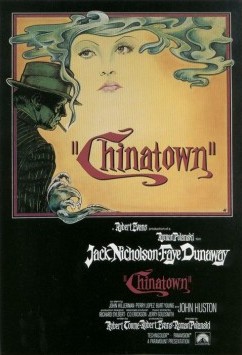
Film Class Films: Chinatown (1974)


When watching  older movies (older than 20 years) I find that the best ones (of which there are many) have two distinct characteristics. On the one hand some of them are so rooted in the time in which they were filmed that they evoke that time so well that you, as an audience member, feel transported back to that time. On the other hand some films are truly timeless and have aged very little if at all since they first released. Many of the truly great films combine  both of these aspects but tend to lean towards timeless, Chinatown is one of those truly great films.

Like the Godfather (also produced by Robert Evans) Chinatown was filmed during the  "Hollywood New Age" of the 1970s but it doesn't feel too trapped in that era. Part of the credit for this goes to the script by Robert Towne. Like the Godfather this film takes a typical Hollywood genre, in this case detective films, and makes some changes to it but while still keeping many of the core elements of the genre. The other credit should go to Polanski for the way that the film was shot. Polanski shoots the 1930's setting with both old fashioned glamor as well as modern "grit". These two elements come together to create a film that is set in the thirties and made in the seventies bt which neither feels like a movie from the thirties or from the seventies.

The film follows Jack Nicholson as a private detective who normally works divorce cases but who ends up getting involved in a case of murder and corruption that continues to get more complex as it goes. To reveal any more of the plot would be criminal and it is quite labyrinthine. This is why Chinatown can be a little difficult to love upon first viewing. It is a movie that requires a lot of concentration from the viewer and upon first viewing that concentration is spent on the plot. The plot of this films is only one part of what makes it great and that is why on second and third viewing the movie continues to improve.

Robert Towne wrote a screenplay that very much follows in the vein of a Raymond Chandler novel. This movie really involves the viewer to the point that even upon third viewing I was still captivated by the ability the films had to reel me in. This is also why when Towne adds some new ideas of his own to the conclusion which differ from your typical Marlowe novel it can be rather abrupt and, well I don't want to ruin it. 

Overall the performances are also fantastic with Dunaway and Nicholson the standouts. In many ways the art of cinema has been very generous to viewers giving us not 10 or 15 but more than 20 films which I consider to be perfect in nearly every respect. Reveling in the joy of watching these great films is as fine an experience as a five star meal. Chinatown is a film that only gets better on each viewing and remains perfect 5/5!

Thursday, October 3, 2013

Classic Horror Video Review 1: Cat People and Curse of the Cat People

It's October and that means Classic horror. This video is the first in a series of reviews that will explore the Horror genre from its beginnings, Enjoy!


Cat People (1982)
Directed by Paul Schrader

The Curse of Cat People (1944)
Directed by Robert Wise and Gunther von Fritsch


Monday, September 30, 2013

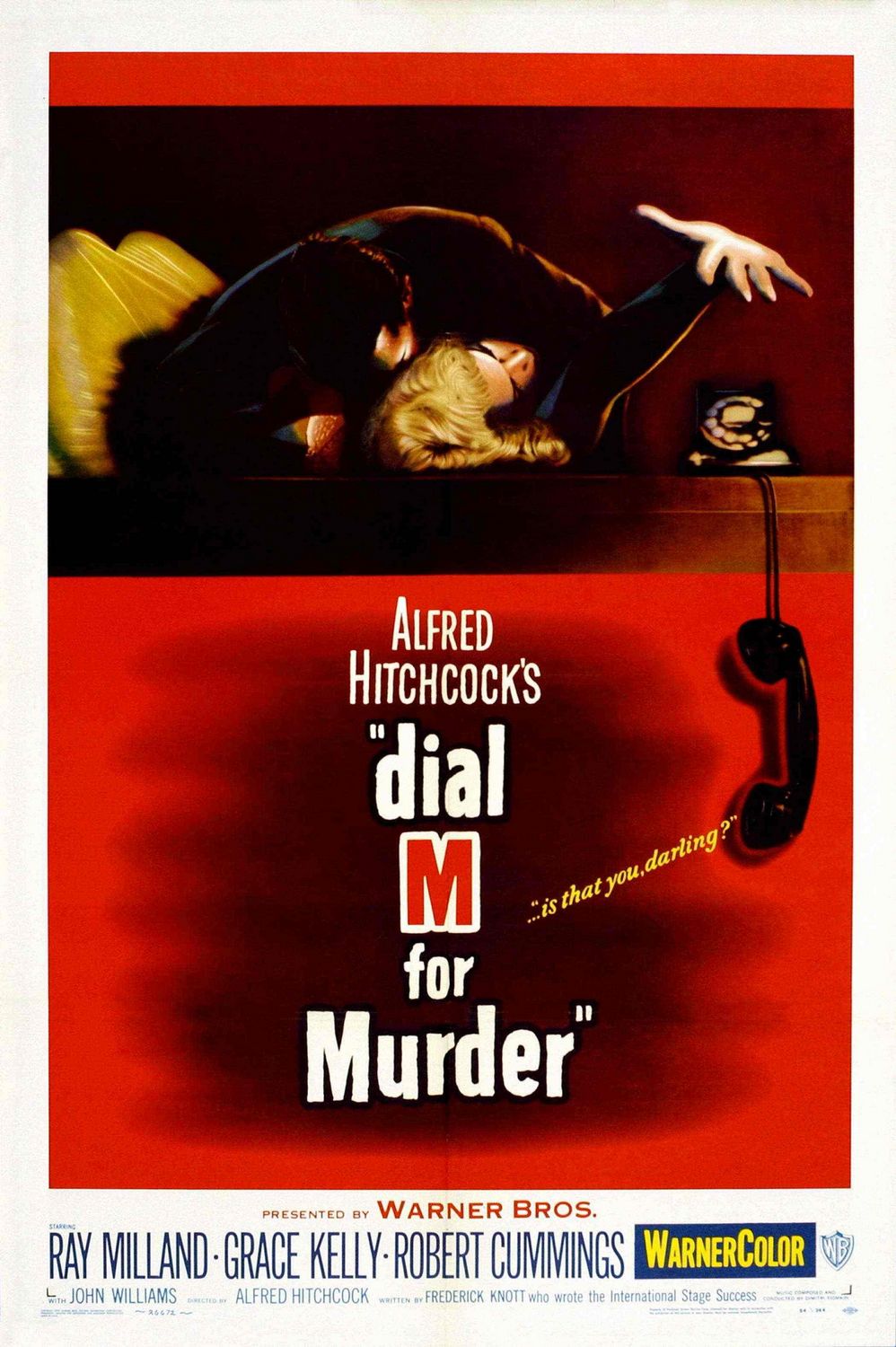
Dial M For Murder (1954) Review


Dial M For Murder was made at the peak of Hitchcock's career. It was his first film to star Grace Kelly and oddly enough it was shot in 3D. It represents a moment in Hollywood history when the threat of television was being felt everywhere and even a self-contained adaption of a stage play could be a 3D movie. This notion is clearly absurd. If you didn't know beforehand there is practically no way to notice that this film was made in 3D. I saw it in 2D and it did nothing to lessen the impact.

This film stars Ray Milland as a husband who wants to murder his promiscuous wife (Grace Kelly). He has this perfect murder plot and the rest of the film follows with great surprises that shall not be spoiled here. The perfect murder idea has been explored countless times and even many times in Hitchcock movies. You would expect that this film would have nothing else to offer but the shock is that it does. The film keeps the audience on the edge of its seat as it hurls itself towards its end. I was even surprised a few times and it was as if Hitchcock was reading my mind and then doing the opposite of what I thought was going to happen. This is the best aspect of this film, the unexpected.

Perhaps the second best aspect of this film is the quality of acting on display. Milland is devilishly sophisticated as the husband and Grace Kelly shows a lot of layers as the wife. She could have played the role straight and gotten away with being Grace Kelly but instead she plays the role  with surprising depth. The dialogue is actually quite good and often infused with great wit.

The direction as usual with Hitchcock is a strong pint. Shows great fluidity and camera movement as well as the proper lighting and shadow. Cutting too is incredibly effective. From the start of the film you are assured that you are in the hands of a master.

Unfortunately while this film has many ingredients that could easily make it top tier Hitchcock, it falters slightly in a few places. this is a nit pick to be sure but I just didn't get the sequence when (Spoiler Alert) a major character is brought to trial. It is overly stylized and to me just feels almost cheap even cheesy. This isn't typical of Hitchcock. Also the film has its own limitations because of its source material being a perfect murder story. The conclusion can feel convoluted at times but to the films credit everything feels well wrapped up in the end. Overall to call this anything but a great film would preposterous but you have to remember whose work we're looking at here and it is a testament Mr. Hitchcock that second tier for him is first rate for everyone else. 4/5

Saturday, September 28, 2013

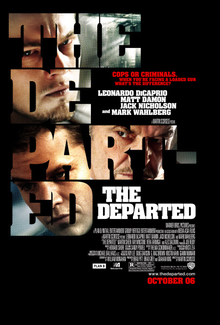
The Departed (2006)


This crime film was the one that finally gave Scorsese his academy award. based on a foreign film called Infernal affairs this story of mob informants, cops, and just plain mobsters is fantastic from start to finish, It keeps audiences glued to the edge of their seats without ever becoming unintelligent. This is how movies should be made.

I was too young to see the Departed when it first hit theaters back in 06 and finally this last week I got a chance to sit down and screen it for myself. I was truly hooked from the opening line to the conclusion. In a day and age where it seems we either sacrifice thrills in our movies for intelligence or vice versa this movie is a refreshing reminder that this doesn't necessarily have to be the case. This film never stops being both interesting and exciting. Offering up scenes of action as well as very compelling characters.

The performances in this film are spectacular. Nicholson's mob boss has to go down as one of the great criminals of the medium. DiCaprio's performance is also equally good. For the rest of the cast including especially Matt Damon, Scorsese's name seems to have attracted the best of the best.

The direction of this film is first rate and really shows a master's touch. From the music used to the action scenes it is quintessential Scorsese and what more could you ask for 5/5! 

Wednesday, September 18, 2013

Don Jon (2013) Review


There is no doubt that Joseph Gordon Levitt is one of the brightest of Hollywood's rising stars. With his performances in the Dark Knight Rises and Looper last year he really showed that he could have true star power. With his directional debut Don Jon he also shows the potential to succeed behind the camera. Don Jon is a far more marquee film than most directional debuts. It has an all star cast which includes Scarlett Johansson as well as Tony Danza. It also benefits from a large advertising budget which has allowed it to get real attention. Unfortunately, despite all of this, it is still quite obvious that this is a first film.

Don Jon tells the story of a title character who cares about "only a few things" in his life. Above all of these things is his obsession with internet pornography. While the film has been marketed as a rom com in a sense, the pornography addiction Jon faces is the center of the film. Jon lives a very repetitive lifestyle until he meets Scarlett Johansson's character Barbara. She is facing her own false images in the form of romantic films. The rest of the film shows how all of this plays out in a somewhat unexpected manner.

One way that it is clear Don Jon is a first film is that it really is quite excessive. I understand the temptation of Levitt to make sure that we really do understand Jon's character and addiction but after a while the film borders on becoming what it is actually against. That's not to say that the film is not multi layered, it certainly is, but sometimes the substance of the film is caught up in the director's attempt to be certain that we understand Jon's addiction. By the film's middle we're thinking "alright already" when another flashy quick cutting montage of his online exploits comes across the screen. I almost feel more time than is allotted should have been spent dissecting Barbara's false images. It seems as though Levitt got caught up in the idea of making a controversial movie instead of really fleshing out his ideas about today's culture.

To the movie's benefit Levitt's ideas about the cultural pressures people face in today's society are definitely relevant, and to a large extent true. The film is most effective when it really stops and takes a look at our misconceptions about the world which we get from the media. The only problem is that this never feels as fleshed out as it should have been. Scenes that have substance seemed rushed over to get to the next montage and for most of the movie the effect leaves a bad taste in the audiences mouth. There is substance here and it is more than one layer deep it just feels like it could have been given more time. The film runs 90 minutes and it wouldn't have been bad if there was just a little longer for the film's core ideas to really set in. Certain aspects of life are definitely simplified, including the Catholic sacrament of Reconciliation. These aspects of the film, if fleshed out, could have made it something even more affective.

Don Jon is technically a comedy and it is funny in places. Unfortunately I think that the subject matter is so risky and serious it isn't a real laugh out loud film in most places. This definitely isn't a date film! The performances by the cast are consistently strong and Danza in particular plays a role that is very different from his previous father figure roles. The direction by Levitt, aside from what is mentioned above, Is interesting and very modern. He has a unique touch which is great to see in a first time director. In the end the question to ask about Don Jon is whether the explicit, long, and outrageously raunchy journey is worth the worthy conclusion the film receives. For me this is a movie I won't plan on seeing again but it does show great directional promise and it ends on a note which almost makes the whole thing work entirely, almost. 3/5

Friday, August 9, 2013

Two Films: Alfred Hitchcock and Joan Fontaine

Rebecca (1940)
Some might argue that Hitchcock's First American film Rebecca belongs more to its producer David Selznick than to Hitchcock. I would disagree, Rebecca has Hitchcock's master touch in every scene. Whether it be the framing of the shots, the timing of the cuts, or the close ups this is a Hitchcock film through and through. The reason for the misconception is that Hitchcock and Selznick did not get along while making this film because they were both very strong artistic personalities. Selznick did not allow Hitchcock to have any control over the final editing process thus people find this film to be more of a Selznick picture than a Hitchcock picture. However, prior to the film ever going into editing Hitchcock shot the film so that it could only be edited his way, thus the credit for this fantastic tale of mystery and suspense belongs with him. Rebecca is the story of a young woman who marries a mysterious and haunted aristocrat. She is not used to the aristocratic life and also feels very overshadowed by her husband's dead first wife Rebecca. This film has elements of the gothic tale and of the murder mystery. Hitchcock manages to create just the right amount of suspense and misdirection and although the actors give great performances there is no question this is a director's film. The close ups and the evocative camerawork really help the audience enter the world of the film. Fontaine gives a fantastic performance as the woman really represents the audience and is therefore unnamed. The supporting cast is absolutely fantastic, full of great character actors like George sanders and Nigel Bruce This film plays like a modern gothic mystery thriller done with the elegant touch of the master of suspense. What more could you want! 5/5!


Suspicion (1941)
Suspicion was Hitchcock's next film and in many ways it is similar to his first American film Rebecca. Both star Joan Fontaine, both feature husband's to the main character who are mysterious, and both had Hitchcock not getting what he wanted because of the studio system. Suspicion is the tale of a bookish young woman who falls in love with a mysterious, handsome man played by Cary Grant. Unfortunately grant is not all he seems and soon she becomes suspicious that he may be capable of murder. This movie is all about building slow and calculated suspense and as always Hitchcock excels. This film has Hitchcock experimenting even more with the better technology he found when he moved from Britain to America. It would take until Shadow for a Doubt in 1942 for Hitchcock to really figure it out but you can see many glimpses here of what was to come. Fontaine won the best supporting actress Oscar for her role and she really does deserve it. Cary Grant really displays some dramatic talent here and a dark side. Grant would become one of Hitchcock's favorite leading men. The supporting cast includes Nigel bruce who is most famous for playing Watson along side basil Rathbone's Sherlock Holmes in those films. Here he gives a great performance as a bumbling Englishmen. Unfortunately, while to first half of the film is truly fantastic, the ending of the film leaves much to be desired. Part of this was due to the production code and talking about why the ending isn't good would give away the film but It really just wraps up to quickly. So while I liked suspicion a lot and felt it had many great performances it is not among the Hitchcock's greatest achievements. 3.5/5

Tuesday, August 6, 2013

Two Films: Inglorious Bastards

Inglorious Bastards (1978)
I would never have seen the original Inglorious Bastards if it were not for my happening to be in one of those nearly extinct video stores. I had no knowledge up to the point when I saw the DVD on the shelf that this film even existed. I didn't know what to expect and was glad to be pleasantly surprised to find that this film is actually a gem. It was an Italian made film that got limited release in America and very little attention. The best way to describe it would be to say that it is sort of a spaghetti western version of the Dirty Dozen. It's about a convoy of allied criminals whose transportation to prison is interrupted and attacked forcing the prisoners to fight their way through Nazi occupied territory. It belongs to the genre of the World War 2 adventure and for that genre it is very action filled and quite a lot of fun. It really is worth checking out and fun for anyone who likes films like this. 4/5


Inglourious Basterds (2009)
Inglorious Basterds is in no way shape or form a remake the 1978 original. This is a Tarantino film through and through and a great one at that! In fact Inglourious Basterds makes its case as being at least in the top 3 of Tarantino's films and in my opinion it is better than Django Unchained. to try and summarize the plot is completely futile and the film should just be experienced for itself. What I will say is that this film is only partially related to WW2  Adventure films like the Dirty Dozen. It definitely has parts that belong to that genre but it is much more than that. This film is very violent and foul mouthed but not nearly as much as other Tarantino films. It is really the acting and the characters that make this movie work to perfection. Tarantino's dialogue is only allowed to live up to its full potential if delivered by the right actors and these are the right actors. Christoph Waltz definitely deserved his academy award for his performance as a Nazi colonel. Brad Pitt does a fine job in his role and so does the rest of the ensemble cast. As stated above this has all of the great ingrediants of a Tarantino film: fantastic dialogue, film references including cameos by actors from the original film, and a great soundtrack. Inglourious Basterds really is a fantastic film with some of the best scenes and acting Tarantino has ever had. A real standout is the opening sequence which while 20 minutes long never feels sluggish and slowly builds to an inevitable conclusion. My conclusion about this film is that it is great 5/5!

Thursday, July 18, 2013

Movies Everyone Must See: Anatomy of a Murder


Otto Preminger became famous for his battles with the censors and for his provocative films, many of them crime dramas. One of my favorite film noir movies was his 1944 movie Laura and his ability with a camera made him one of Hollywood’s greatest directors. Anatomy of a Murder allowed Preminger to not only battle the censors with the movie’s frank discussion of rape but also to call on his experiences studying law. Preminger always strove for realism in his movies and his experiences in law and his choice to shoot the entire film on location in the Upper Peninsula of Michigan give the proceedings the feeling of the utmost realism. It’s a very realistic depiction of a trial and it is a long movie and yet it is incredibly entertaining and one of Preminger and indeed Hollywood’s best crime movies. The reason for this partly stems from the realism and the choice to shoot on location. The setting in the UP gives the film a very unique and interesting atmosphere and gives it a true sense of setting. The other reason for this film’s greatness stems from the caliber of its acting. The film depicts a lawyer played by James Stewart and his attempt to defend a man convicted of murder with a plea of insanity. The murder motive was the fact that the man killed had raped the defendant’s wife. Stewart plays the lawyer perfectly and with an ambiguity that leads us to question him and wonder whether he is really doing the right thing. This gives the movie some added depth and also allows Jimmy Stewart to very slyly play a very complex character. Every other performance is quite good but the truly standout performance, other than Stewart’s, is George c. Scott as a prosecutor. He is the only man I have ever seen who can almost steal a film from Jimmy Stewart. He owns every scene he is in and he and Stewart complement each other wonderfully and give the theatricality of this trial true entertainment value. It is captivating to watch Stewart and Scott spar, two giants of their profession at the top of their game. Preminger’s direction is also very good with the camera placement in the courtroom absolutely fantastic. Add to the location acting and directing a score by the famous jazz composer Duke Ellington and you have one for the ages! 5/5!


Tuesday, June 18, 2013

Pandora and the Flying Dutchman (1951) Review


Pandora and the Flying Dutchman can best be described as "dreamlike". It shares this distinctive feature with two other films that immediately come to mind, the original the Mummy with Boris Karloff and Val Lewton's I walked with a Zombie. I find it to be no coincidence that those other two films are both horror films because the dreamlike sensation comes from the films' mix of the real with the unreal, the fairytale with the ordinary, this is the basis of many classic horror films and in this case it is the basis of a romance. I also find it quite interesting that of all the movies I've seen I would say Pandora shares many similarities to that first Mummy film, both in effect and in plot and story. To try and summarize the plot of this film would really be quite futile so I will just say you'll have to see for yourself. It's a supernatural romance set in the 1930's on the Spanish coast. The real star of the film is not the plot but the visuals. As brilliant as many earlier Technicolor films might be (the Adventures of Robin Hood, the Wizard of Oz, and Gone With the Wind) the only problem with them is that they lack the creative use of light and shadow that make the black and white films of that era so wonderful to behold. Pandora remedies this with its brilliant Technicolor visuals which give off the effect as if they'd been painted onto the screen. There is wonderful use of light and shadow here and that combined with the scenery of the Spanish coast makes for a wonderful viewing experience. As far as acting is concerned everyone is in fine form especially James Mason who plays the lead with a suave, urbane, quality that he has become so known for. Overall with the acting, the strange story, and the visuals this movie has this is one dream you won't mind having,  4.5/5

Wednesday, June 12, 2013

Netflix Pix: Double Indemnity (1944)

Ever wonder what to watch on Netflix? the articles in this series take a look at some of the best movies to watch instantly!


"I did it for money and for a woman, I didn't get the money and I didn't get the woman" Those words usher in perhaps THE quintessential film noir, Billy Wilder's double Indemnity. These words are spoken by insurance man Walter Neff before we enter flashback as he narrates for us a story of lust and murder. Wilder uses openings that flashback much like Shakespeare used prologues. They recall Greek tragedy and also create a sense of foreboding that keeps the audience in suspense. Double Indemnity was co written by the great crime writer Raymond Chandler whose lyrical style gives the film that perfect noir feel. This story of a man seduced into committing murder by a femme fatale would become the genesis of many a noir film. Wilder does something truly incredible here in that he makes the audience root for two cold blooded killers. This movie make murder incredibly entertaining and if you haven't seen it you're in for a real treat. This is one of the truly great noir films but also one of the great films of all time with Barbara Stanwyck giving a truly memorable performance as the femme fatale. You won't want to miss this! 5/5!