Showing posts with label Classic. Show all posts

Thursday, May 22, 2014

Classics Thursday: On the Waterfront (1954)


In continuing with my new series I am reviewing another great film. This one is very well known, so it is not in the "gem" category, but after picking up Criterion's wonderful Blu-Ray this week I couldn't help watching it again and reviewing it.

Very few films have as important a place in film history as On the Waterfront. Many times a film is either historically significant, in that it is inexorably connected to its period due to its subject matter or style, or artistically significant, In that the techniques used to create the film were revolutionary. On the Waterfront is in that rare group of films that are both historically significant and artistically significant. The historical significance stems from its connection to the Hollywood blacklist. This has been written about many times in many places and really has very little bearing on a review of the film so if you are interested in the significance this film has in relation to the blacklist feel free to look it up for yourself. For the purposes of this review I will focus on the many advancements On the Waterfront made in terms of acting and filmmaking technique.

On the Waterfront is the story of Terry Malloy who begins the film as a heavy for the waterfront union. Throughout the course of the film Malloy begins to realize the types of atrocious things the union is doing and finally stands up against them. This is difficult since his older brother is very close to the union boss. The film is about Terry standing up for what's right and coming to realizations about his character. The true power of the film cannot be given in a brief synopses as this film is really about character. The revolutionary acting and directing allow this to be possible.

This film is a master-class in method acting, an acting style which was still quite new at the time. Brando's performance is legendary, and rightfully so. He brings so many layers to Terry that you feel that the character really comes alive. The famous "contender" speech is rightfully famous as well. It is really the dramatic peak of the film, and while repeated over and over it still retains much of its power. The rest of the cast also turn in tremendous performances. Eva Marie Saint in particular seems to work very well with Brando and you can't imagine another actress in that role  Karl Malden plays my favorite priest in film history, Father Barry. Finally Lee J. Cobb brings the right amount of nastiness to the role of the ironically named Johnny Friendly.

Acting is often what draws people to this film but Kazan's direction and innovative location shooting are what help make it a "perfect" film. The idea of making a movie, in widescreen no less, on a grimy waterfront was risky in the 1950's. This level of realism had been explored in Europe, especially Italy (see Bicycle Thieves as an example), but in America it was just not typical. Kazan brings an energy to the film that keeps everything moving. His close ups allow the actors to act and his framing gives every scene the right mood. The score is by Leonard Bernstein and it is quite dramatic but because of Kazan's energy it works very well.

On the Waterfront is a movie everyone should experience at some point. It is both a moral tale and a character study which works on a variety of levels. If you haven't seen it now is the time to check it out and if you have, you already know that it is worth going back to. It is simply one of the classics of cinema 5/5!

Thursday, May 15, 2014

Classics Thursday: Charade (1963)


After a short hiatus (due to studying for finals) I am now back writing film reviews. For the summer I am going to institute a new series called "Classics Thursday". Every week on Thursday there will be a new review of a classic film. Some films will probably be ones that many may have seen, but my goal is to find, and review, some gems. Because of this, If you have any suggestions for movies that I should review for this series please comment.

Charade has been called "the best Hitchcock film Hitchcock never made", by that description alone I knew I had to see this film. Charade was directed by Stanley Donen, who, while not as well known as Hitchcock, is a great director in his own right. Donen is known for his musicals like Funny Face and my all-time favorite, Singin' in the Rain. Charade is the first, and only, pairing of two of the screen's most iconic stars: Cary Grant and Audrey Hepburn. Based on this film it's a shame that these two never did another film. All of this talent behind, and in front , of the camera makes Charade a truly fantastic film in the classical Hollywood vein. It was made in a year when that style was slowly dying out, but it shows no signs of aging in Charade.

Charade begins with a murder, the murder of Audrey Hepburn's characters' husband. This murder leads to a series of twists that really should be experienced uninhibited by spoilers. Suffice it to say, that this film is a jigsaw puzzle in which no one can be trusted. It is a thriller in the vein of North By Northwest with chases, witty dialog, suspense and romance in equal measure. Grant plays the urbane character he does so well and Hepburn is really the center of the film. Both stars light up the screen. Part of the reason for this, is the quality of the dialogue, but another reason is the power of seeing these two icons meet. The supporting cast is filled with great actors playing the roles we always imagine them in. Walter Matthau plays a member of the state department while George Kennedy and James Coburn play assassins. This depth in the cast is reminiscent of the great Hollywood films of old.

Donen directs the film with a style that is very reminiscent of Hitchcock. This is a major compliment. Donen creates sequences that are memorable long after the film is over. The musical score is by Henry Mancini, and that's all you need to know to know that it's good. The film takes great advantage of its locations and seeing it on Blu-Ray was a fun visual experience.

A surprising aspect of Charade is its comedy. It's as if Donen set out to create a perfect combination of the classic screwball comedy of the thirties and the post-war thriller of the forties. For the most part this combination is incredibly successful. The romantic comedy aspects of this film make Charade a little like a happy median between Hitchcock's To Catch a Thief and North By Northwest. This makes for one of the most entertaining experiences a film goer could have, but it is impossible to call Charade perfect. As with anything this tightly plotted, it can seem contrived at times, and some of the comedy could be a little bit out of place. Like Hitchcock however, because the film on a whole is so entertaining I really can't resist giving Charade a 5/5!

Remember if there are any films that you think are "gems" that you would like me to review please comment below!

Thursday, October 10, 2013

Classic Horror Reviews 2

The second installment in my series of video reviews exploring classic horror, Enjoy!


I Walked with a Zombie (1943)
Directed by Jacques Tourneur

The Leopard Man (1943)
Directed by Jacques Tourneur

The Body Snatcher (1945)
Directed by Robert Wise

Thursday, October 3, 2013

Classic Horror Video Review 1: Cat People and Curse of the Cat People

It's October and that means Classic horror. This video is the first in a series of reviews that will explore the Horror genre from its beginnings, Enjoy!


Cat People (1982)
Directed by Paul Schrader

The Curse of Cat People (1944)
Directed by Robert Wise and Gunther von Fritsch


Monday, September 30, 2013

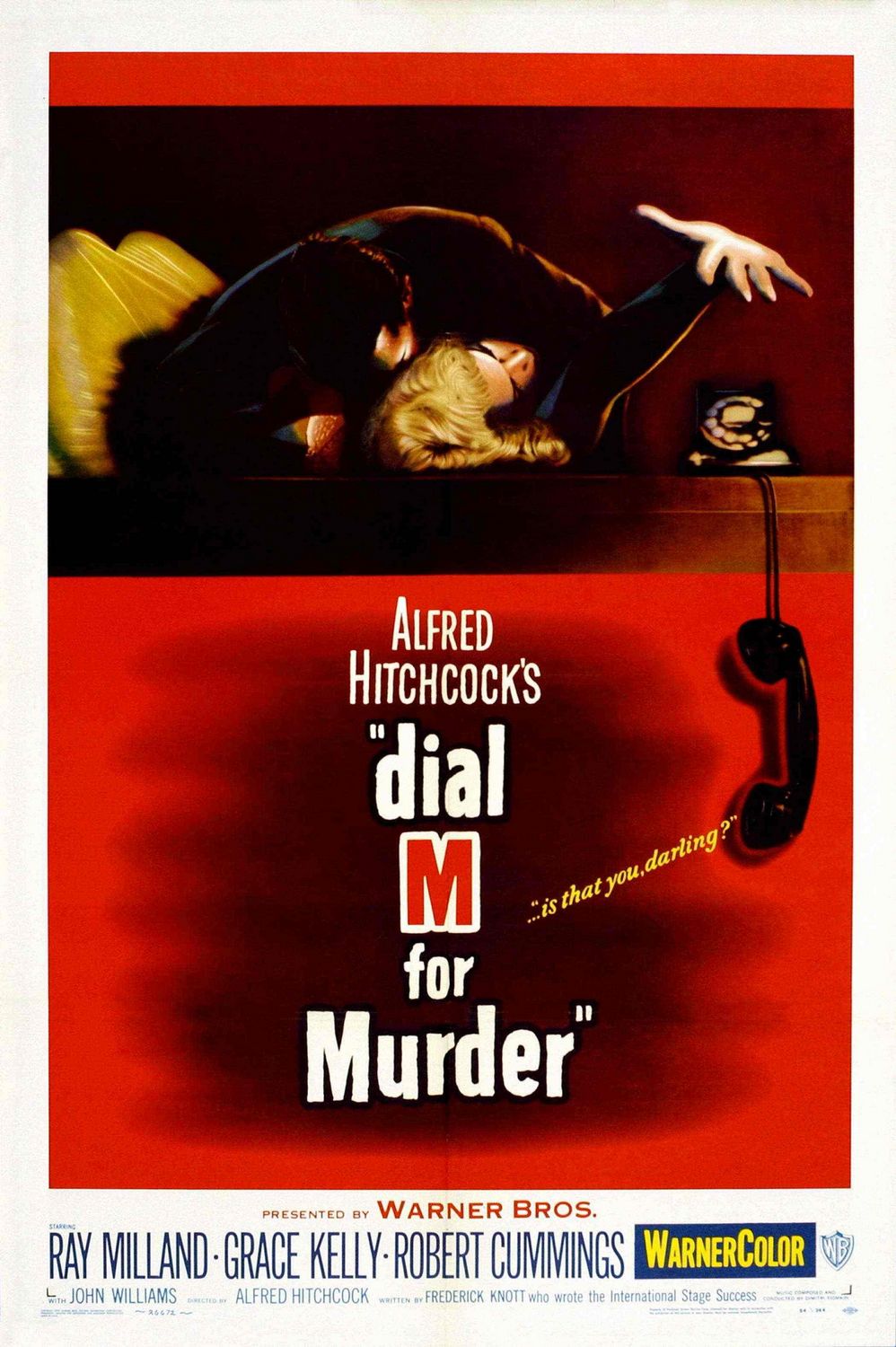
Dial M For Murder (1954) Review


Dial M For Murder was made at the peak of Hitchcock's career. It was his first film to star Grace Kelly and oddly enough it was shot in 3D. It represents a moment in Hollywood history when the threat of television was being felt everywhere and even a self-contained adaption of a stage play could be a 3D movie. This notion is clearly absurd. If you didn't know beforehand there is practically no way to notice that this film was made in 3D. I saw it in 2D and it did nothing to lessen the impact.

This film stars Ray Milland as a husband who wants to murder his promiscuous wife (Grace Kelly). He has this perfect murder plot and the rest of the film follows with great surprises that shall not be spoiled here. The perfect murder idea has been explored countless times and even many times in Hitchcock movies. You would expect that this film would have nothing else to offer but the shock is that it does. The film keeps the audience on the edge of its seat as it hurls itself towards its end. I was even surprised a few times and it was as if Hitchcock was reading my mind and then doing the opposite of what I thought was going to happen. This is the best aspect of this film, the unexpected.

Perhaps the second best aspect of this film is the quality of acting on display. Milland is devilishly sophisticated as the husband and Grace Kelly shows a lot of layers as the wife. She could have played the role straight and gotten away with being Grace Kelly but instead she plays the role  with surprising depth. The dialogue is actually quite good and often infused with great wit.

The direction as usual with Hitchcock is a strong pint. Shows great fluidity and camera movement as well as the proper lighting and shadow. Cutting too is incredibly effective. From the start of the film you are assured that you are in the hands of a master.

Unfortunately while this film has many ingredients that could easily make it top tier Hitchcock, it falters slightly in a few places. this is a nit pick to be sure but I just didn't get the sequence when (Spoiler Alert) a major character is brought to trial. It is overly stylized and to me just feels almost cheap even cheesy. This isn't typical of Hitchcock. Also the film has its own limitations because of its source material being a perfect murder story. The conclusion can feel convoluted at times but to the films credit everything feels well wrapped up in the end. Overall to call this anything but a great film would preposterous but you have to remember whose work we're looking at here and it is a testament Mr. Hitchcock that second tier for him is first rate for everyone else. 4/5

Tuesday, September 10, 2013

Movies Everyone Must See: The Awful Truth (1937)


The Awful Truth starring Cary Grant and Irene Dunne was made at the height of the golden age of screwball comedy in the 1930's and it is one of the best of that type of film. The film is a classic story about a married couple in the process of divorce who soon realize that they need to get back together. It is not the plot of this film that matters, most people will be able to guess the ending before it even starts, but it's how funny this movie is that makes it a true classic.

Grant is in top form here playing a comedic type that he would reprise successfully many times. His cool and suave demeanor coupled with his biting humor help him to capture the audience. Dunne isn't bad at all either, her role requires for a bit of serious acting and it comes off quite well. In fact she was nominated for best actress by the Academy that year for this performance. The supporting cast, as in all comedies of this era, is absolutely superb.

The Beauty of this film is that it does not rush you into the comedy but instead slowly builds in hilarity. This may be a little strange for viewers not used to comedies of this era who are used instead to joke a minute parodies. If you are patient, your patience will be well rewarded and the film builds to a very satisfactory conclusion.

The Awful Truth definitely ranks among the best of the many great screwball comedies of the era. Combining fantastic performances and truly hilarious situation this is one for the ages! 5/5

Wednesday, September 4, 2013

Film Class Films: "In the Beginning" the Great Train Rbbery (1903) and Charlie Chaplin's the Kid (1921)

This new series of posts is devoted to the films which I view as part of my History of American Film class in college. These posts will contain reviews of the films as well as analysis of their place in film history as a whole. Films will be added in the order that I see them in class.

The Great Train Robbery (1903)
This film is really impossible to write a review about so this is more of an analysis about the place this film holds in the history of the medium. The great Train Robbery was the first film to have a cohesive plot with a beginning a middle and an end. Clocking in at 13 minutes this film is definitely shorter than a feature and it is worth watching for the historical aspects of it. It is also worth watching because, considering that it is 110 years old, it is a quite sophisticated film. Porter made a huge leap in directing in this film and every movies owes something to this film because it was the first to pave the way!


The Kid (1921)
The Kid comes almost twenty years after the Great Train Robbery and it is considered one of comedian Charlie Chaplin's greatest works. The film tells the story of a boy who is estranged from his single mother and ends up in the care of Chaplin's character the Tramp. While many Chaplin films offer great gags the Kid is notable for its use of real drama. This is not a pure comedy but is instead a dramedy with many effective scenes. It is admittedly hard to get into silent movies and this film is no exception but if you just force yourself to watch it you might find that the lack of sound fades away and the film comes alive. It doesn't quite come alive enough for me to want to see it again but it is definitely a pivotal work in the career of a great comedian. 4/5